Anxiety Relief Bundle: Mindfulness, Prompts & Checklist
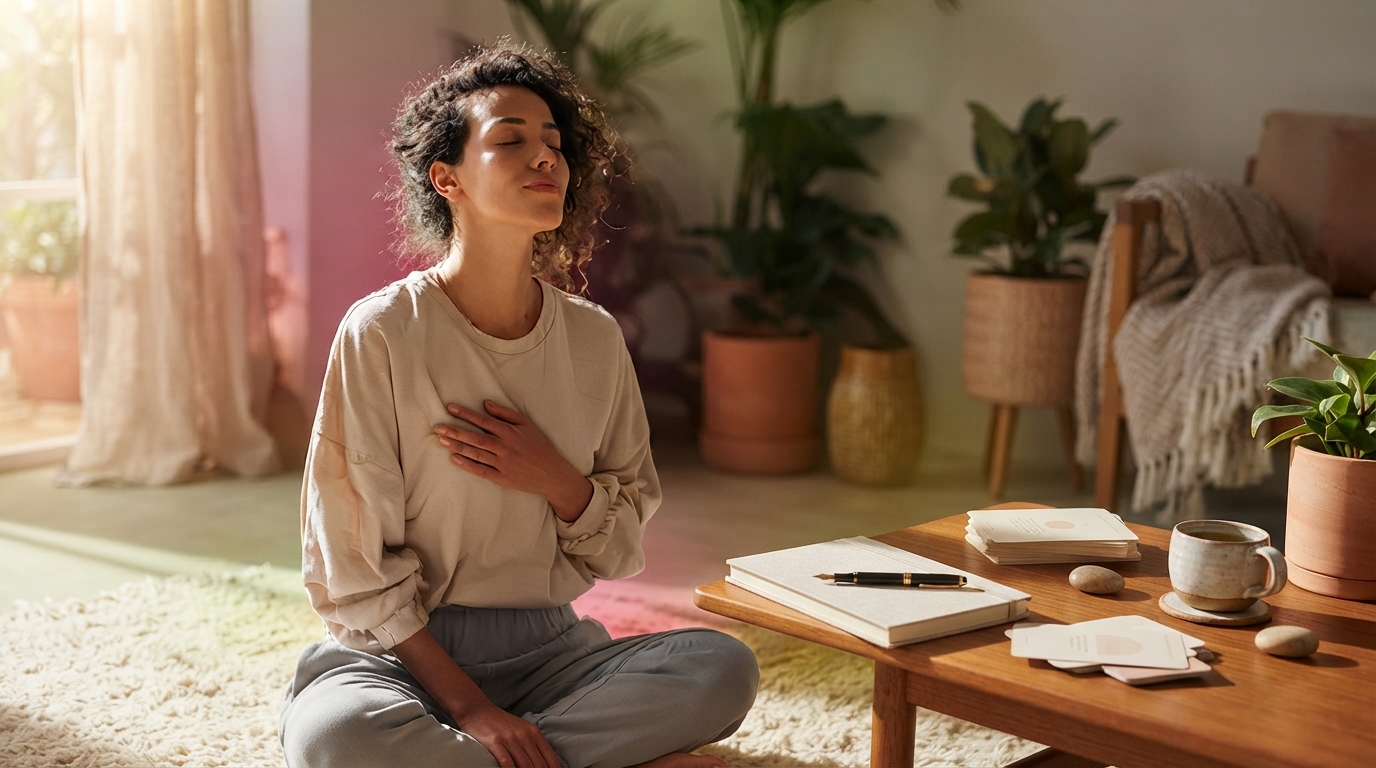
The Anxiety Relief Bundle: A Path to Calm — Mindfulness, Positive Thinking, and Printables for Daily Support
Stress can build quietly—then show up as racing thoughts, tight shoulders, or a constant sense of urgency. The Anxiety Relief Bundle: A Path to Calm brings together four practical tools designed to support steadier routines: mindfulness exercises, positive thinking prompts, a printable checklist, and a course outline that ties everything into a simple path forward. The goal isn’t “never feel anxious.” It’s having reliable, repeatable steps for the moments when anxiety spikes—and a realistic structure for building calmer habits over time.
What’s inside the 4-in-1 bundle
Instead of bouncing between scattered tips, the bundle keeps your support tools in one place—so you can pick what fits your energy level today and still feel like you’re moving forward.
- Mindfulness exercises to help shift attention from spiraling thoughts to present-moment grounding
- Positive thinking prompts that encourage balanced self-talk without forcing unrealistic optimism
- A printable checklist to turn coping skills into a repeatable daily routine
- A course outline that organizes topics into a step-by-step sequence for consistent practice
- Designed for flexible use: quick resets during a stressful day or longer sessions for building habits
Bundle components at a glance
| Component | Best for | Typical time needed | How it helps |
|---|---|---|---|
| Mindfulness exercises | Calming the body and attention | 2–15 minutes | Grounding, breathing, noticing sensations, reducing reactivity |
| Positive thinking prompts | Reframing anxious thoughts | 5–10 minutes | Balanced perspective, kinder inner dialogue, cognitive flexibility |
| Printable checklist | Consistency and tracking | 1–3 minutes | Turns tools into a plan; supports follow-through |
| Course outline | Structured learning | Varies (self-paced) | Creates a roadmap so progress feels organized and measurable |
Who this bundle fits best
The tools are intentionally practical: short, repeatable, and easy to return to—especially on days when motivation is low.
- People who feel mentally “on” all day and want practical decompression steps
- Anyone who prefers guided structure rather than piecing together coping tools from multiple sources
- Busy schedules: short exercises that can be done between tasks
- Journaling-friendly learners who benefit from prompts and checklists
- Those building a personal routine alongside professional support (therapy, coaching, or medical care)
A gentle routine: how the pieces work together
The strength of a bundle like this is how each piece supports the others. You’re not relying on a single technique to “fix” everything; you’re building a small system you can repeat.
- Start with a short mindfulness exercise to reduce physical tension and slow the stress response.
- Use a positive thinking prompt to label the worry and replace all-or-nothing thoughts with a more realistic statement.
- Check off the printable checklist to reinforce completion and create a sense of control.
- Follow the course outline weekly to build skills in a predictable order rather than jumping between techniques.
- Keep expectations small: consistent short practice typically beats occasional long sessions.
Example weekly rhythm (adjust as needed)
| Day | Quick reset | Deeper practice | Tracking |
|---|---|---|---|
| Mon–Wed | 2–5 min breathing or grounding | One prompt + brief reflection | Checklist: 1–2 items |
| Thu–Fri | 5 min mindful scan | Prompt + action step for one worry | Checklist: 2–3 items |
| Weekend | Mindful walk or longer session | Review course outline topic + notes | Checklist + weekly review |
Mindfulness exercises: practical calm without perfection
Mindfulness doesn’t require a perfectly quiet mind. A more workable approach is practicing attention: noticing what’s happening right now and gently returning when the mind pulls away. The American Psychological Association highlights mindfulness meditation as a research-supported way to reduce stress for many people (APA overview).
- Focus on noticing (breath, sounds, body sensations) rather than trying to “empty the mind.”
- Use grounding when thoughts race: name what’s seen, heard, felt to re-anchor attention.
- Pair mindfulness with daily cues (morning coffee, commute, bedtime) so practice becomes automatic.
- If anxiety spikes during practice, shorten the time window and return to simple sensory anchors.
Positive thinking that stays realistic
“Positive thinking” works best when it’s balanced—less about forcing yourself to feel upbeat and more about loosening the grip of catastrophic predictions. This style of reframing is closely related to cognitive behavioral therapy principles (learn more about CBT basics via the NHS).
Printable checklist: turning coping skills into a habit
Course outline: a clearer path when motivation is low
On tough weeks, it’s common to jump between techniques and still feel stuck. A course outline helps by giving you a sequence—what to learn first, what to practice next, and what to revisit when symptoms flare. For background on how common and varied anxiety disorders can be, the National Institute of Mental Health offers a helpful overview (NIMH).
Getting started in 15 minutes
Extra support for an easier environment
For some people, physical clutter adds background stress—especially when mornings feel rushed. A simple organizing approach can complement a calming routine by reducing daily friction. If that’s a pain point, How AI Can Help You Organize Your Makeup Collection | Smart Beauty Decluttering Ebook is a practical add-on for streamlining a high-traffic part of your routine.
FAQ
Is this bundle a replacement for therapy or medication?
No. It’s a self-help support resource designed to complement care and build day-to-day skills; if symptoms are severe, persistent, or worsening, professional support is recommended, and urgent help is important in a crisis.
How quickly can results be noticed?
Some people notice a calmer body or quieter thoughts after a short practice, but more lasting change usually comes from consistent routines over several weeks.
Do the printables work for beginners?
Yes. The steps can be kept minimal (a short exercise, one prompt, and a couple checklist items), then gradually expanded as the routine feels more natural.











Leave a comment