Patience-Building Hobbies: Mindfulness and Focus in 4 Weeks
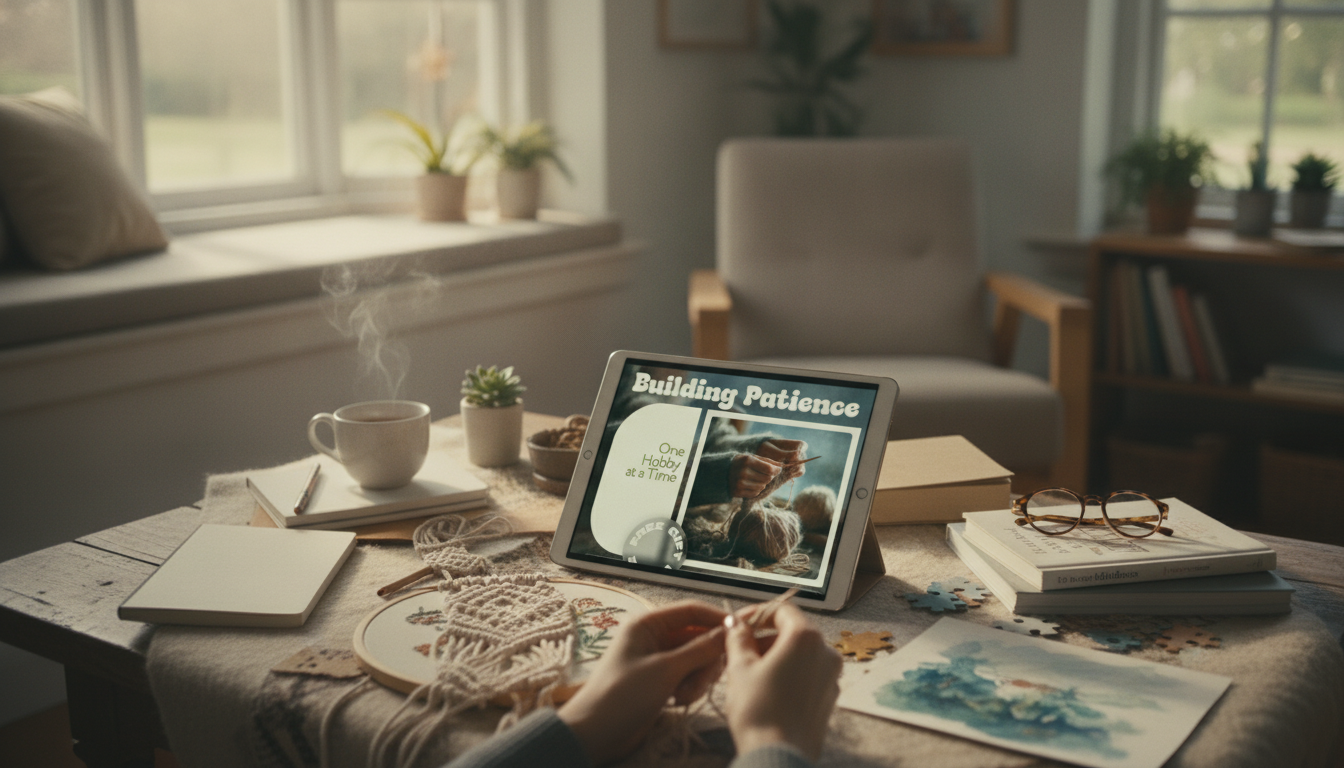
Building Patience One Hobby at a Time: A Practical Guide to Mindfulness and Lasting Focus
Patience is a skill that grows through repeated, low-stakes practice—not willpower alone. The most reliable way to build it is to choose hobbies that reward steady attention, small improvements, and calm recovery from mistakes. The right hobby becomes a quiet training ground: you show up, do the next small step, and let progress arrive on its own timeline.
Mindfulness fits naturally into this process. Paying attention on purpose—without judging each imperfect result—supports focus and emotional steadiness, which are core ingredients of patience. For more on how mindfulness works, see the American Psychological Association overview and the NIH NCCIH guide.
Why hobbies are a natural training ground for patience
- They create “safe friction.” Mild challenge without high consequences makes it easier to stay calm while learning.
- Progress is visible over weeks, not minutes. That time horizon retrains expectations and reduces the urge to rush.
- Feedback loops reward slowing down. A cleaner stitch, steadier line, or better timing makes patience feel practical, not abstract.
- Attention control strengthens with repetition. Returning to the task repeatedly teaches refocusing without spiraling into self-criticism.
What “patience-building” hobbies have in common
- A clear next step. The hobby breaks into small actions (one row, one scale, one brushstroke).
- Tolerant of imperfection. Mistakes are expected and usually fixable or workable.
- A rhythm that encourages presence. Repetitive motions or timed sessions settle the nervous system.
- Measurable mastery. Improvement can be tracked through simple goals instead of “get good fast.”
- A gentle barrier to distraction. Hands and mind stay occupied, reducing multitasking.
Hobby paths that build patience, mindfulness, and focus
Different hobbies teach patience in slightly different ways. Choose one that matches your temperament, then keep it small enough that consistency feels easy.
Handcrafts (knitting, crochet, embroidery, woodworking)
Handcrafts train sequencing and “error recovery”: noticing a mistake, staying calm, and backing up one small step at a time. The repetition also makes it easier to settle into single-tasking.
Drawing/painting (sketching, watercolor, calligraphy)
Visual arts build observation before action. The patience skill is learning to look longer than you draw, and to treat each attempt as information rather than a verdict.
Music practice (piano, guitar, drums, singing)
Music rewards slow repetition, timing, and deliberate practice. When you keep tempo slow enough to play cleanly, patience stops being “waiting” and becomes a method.
Gardening (indoor herbs, balcony planters)
Gardening is a hands-on lesson in waiting and responding to conditions without forcing outcomes. Small, consistent care beats big bursts of effort.
Puzzles and strategy (jigsaw, chess puzzles, crosswords)
Puzzles strengthen sustained attention and frustration tolerance. They also teach stopping mid-progress—an underrated patience skill.
Mindful movement (yoga, tai chi, stretching routines)
Mindful movement builds patience with the body: breathing through sensations, noticing improvement gradually, and practicing without a rush to “achieve.”
Cooking and baking (bread, fermentation, slow recipes)
Cooking rewards planning and timing. Baking, in particular, makes patience unavoidable: you can’t rush dough development or fermentation without paying for it later.
Quick picks: hobby type, patience skill, and an easy starting session
| Hobby type | Patience skill trained | Beginner-friendly first session (10–20 min) |
|---|---|---|
| Embroidery or cross-stitch | Steady pacing; accepting small mistakes | Thread a needle, practice 20 simple stitches on scrap fabric |
| Watercolor or sketching | Slowing down; observing before acting | Draw one object with 3-minute look/1-minute draw cycles (4 rounds) |
| Instrument practice | Repetition without rushing | Pick one scale or chord change; play slowly for 5 minutes, rest, repeat |
| Indoor gardening | Waiting; consistent care | Pot one herb, label it, set a watering/light reminder |
| Jigsaw puzzle | Sustained focus; frustration tolerance | Sort edge pieces, assemble one small section, stop mid-progress on purpose |
| Bread baking | Timing; letting go of control | Mix a simple dough, note rise time, observe changes instead of checking constantly |
A simple 4-week plan to build patience through any hobby
Keep one metric: sessions completed. Quality is secondary and tends to improve as consistency becomes automatic. For a deeper look at mindfulness and attention, Harvard Health summarizes research on attention benefits here: Mindfulness practice may help improve attention.
Micro-skills that make patience stick
Choosing the right hobby for your personality and schedule
Digital support that keeps practice consistent
A practical guide designed for patience-building practice
If decision fatigue is the main obstacle, a focused download can make starting simpler by narrowing choices and reinforcing calm repetition with prompts. Building Patience One Hobby at a Time – Digital Download is designed around beginner-friendly quick starts, consistency-first practice, and reflection that supports mindful attention rather than performance pressure.
For anyone who finds patience gets derailed by clutter and constant searching, a parallel “set-and-reset” routine can help reduce friction between sessions. How AI Can Help You Organize Your Makeup Collection | Smart Beauty Decluttering Ebook offers a structured approach to organizing and maintaining a calmer setup—useful when the goal is fewer distractions and easier follow-through.
FAQ
How long does it take to build patience with a hobby?
Most people notice small changes in 2–4 weeks if sessions are consistent. Stronger, more automatic patience habits tend to form over 8–12 weeks, especially when the main win is “sessions completed,” not perfect results.
What if a hobby makes frustration worse at first?
Early frustration is common because attention is being asked to do something new. Shorten sessions, simplify the project, use a three-breath pause cue, and consider a more forgiving medium until confidence catches up.
Which hobby is best for improving focus quickly?
Puzzles, drawing observation drills, slow instrument practice, and knitting/crochet often improve focus quickly because they encourage single-tasking with clear feedback. Keep sessions time-boxed to 10–20 minutes to build consistency without burnout.










Leave a comment